The View from Above
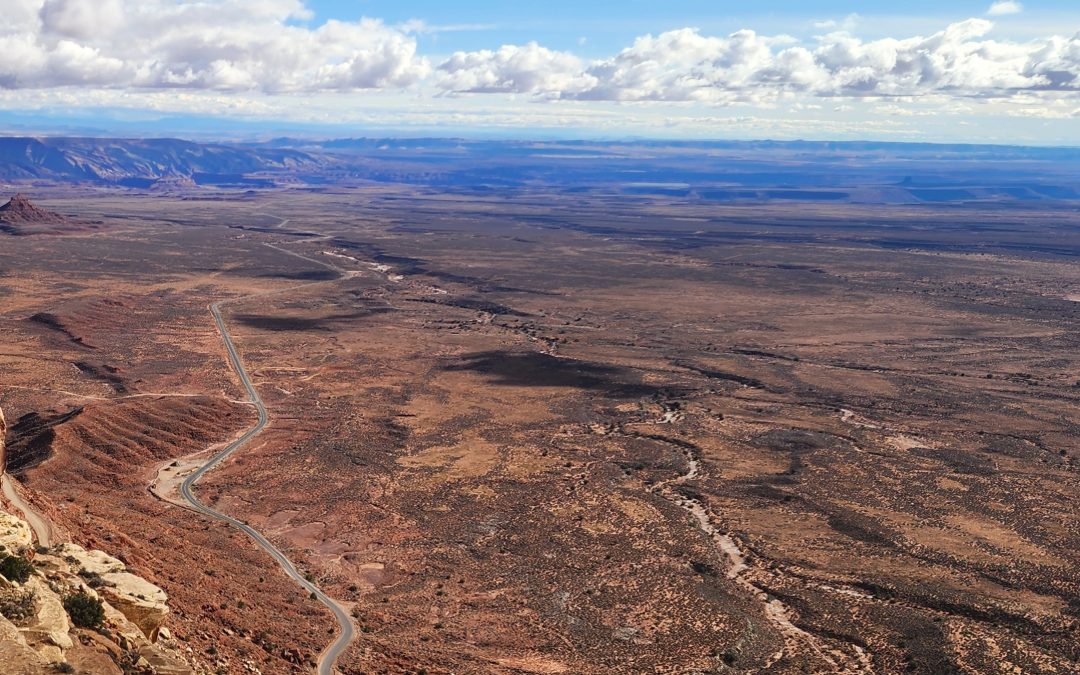
For years, I took people up in the air who had never flown over their home ground in a small, slow plane. Every single person—without exception—had the same response when they saw their familiar landscape from a thousand feet up:
“Oh! I had no idea how close everything is! How connected things are… how they relate to each other. This is so COOL!”
On the ground, things appear separate, distant, isolated. You drive fifteen minutes to work and it feels like a long commute. Your neighbor’s property and yours are divided by a fence. The river runs somewhere “over there,” disconnected from your daily life.
But at altitude, the truth becomes instantly visible: Your house is right next to the park. The river winds through the entire valley, connecting everything. Your neighbor’s land flows directly into yours. The town you thought was far away is actually just around that curve in the road. The highway that felt like a barrier is actually the connector.
The relationships are always there. You just can’t see them from where you’re standing on the ground.
From Small Planes to Spacecraft: The Overview Effect
Astronauts report something similar they call the Overview Effect. From space, looking back at Earth, something fundamental shifts. All the borders that seemed so real, so important, so worth fighting over… disappear. The conflicts that consumed nations become as absurd as they are, from that perspective. The overwhelming recognition hits every level of a person’s being: We’re all on this one fragile planet together. And it’s not so much that they return with a plan of how to be different…they return different.
Astronauts describe it as irreversible. Once you’ve seen Earth that way, you can’t unsee it. You can’t go back to thinking the way you did before. The illusion of separation becomes impossible to maintain.
And…most of us will never go to space.
WordTrails: The Overview Experience
WordTrails functions as a simulator—not for flying a plane, but for gaining altitude on your relational landscape.
Just as my passengers discovered “Oh! Everything is so much closer and more connected than I realized,” people playing WordTrails discover the same thing about their relationships, their conflicts, their supposedly opposed positions:
“Oh. We’re both afraid for our children.” “Oh. We both marked ‘safety’ and ‘future.'” “Oh. The thing that seemed like it divided us… doesn’t, actually.”
The connections were always there. WordTrails simply gives you enough altitude to see them.
How It Works: The Flight Simulator Mechanics
Before we explore what people experience at different “altitudes,” let’s understand the mechanics—why WordTrails functions as an effective simulator.
The Declarative → Procedural Shift
Flight simulators move pilots from conscious rule-following (left hemisphere: “I must check altitude, then adjust trim, then…”) to embodied pattern recognition (right hemisphere: “I perceive the aircraft is in a descent configuration and my hands respond”).
WordTrails does the same thing for emotional and relational awareness. It moves players from analytical overthinking (“What should I say? How will this sound?”) to embodied choice (“Don’t think too much, just choose”—engaging the insula for interoceptive/felt-sense decision-making).
Safety Without Danger
Flight simulators provide repetition and pattern exposure WITHOUT the amygdala hijack that real danger creates. The cortisol spike of actual flight emergency inhibits the very learning you need.
WordTrails creates the same conditions for emotional/relational learning:
- Rule #2 (“no take backs”) = you’re in real emotional territory, but the judgment/shame/blame circuits are disengaged
- Rule #3 (“no explanations”) = you can’t defend or attack, so the threat response has nothing to do
- The structure of play = you get the real experience of making choices with emotional weight, but without the threat response that would prevent integration
The Result
Both flight simulators and WordTrails create conditions for accelerated learning through safe exposure to complexity. Both shift processing from analytical to embodied. Both use spatial-relational frameworks to integrate information that can’t be reduced to verbal rules.
But here’s where WordTrails goes further: it’s not just training a skill. It’s providing altitude—a perspective shift that reveals what was always true but couldn’t be seen from ground level.
Ground Level: Where We Usually Live
At ground level, we experience:
- Separation: “You and I are fundamentally different”
- Opposition: “Your gain is my loss”
- Threat: “If you win, I lose”
- Isolation: “My struggle is separate from your struggle”
- Distance: “What you care about is far from what I care about”
This isn’t wrong or bad—it’s the very real view from ground level. You’re so close to everything that you can’t see how it all connects. And things ARE more dangerous because of the limited perspective and the need to react to threatening events that catch you by surprise. This is not an illusion.
Examples of ground-level perception:
- Divorcing couple: “You’re the enemy. Everything you do threatens me and the kids.”
- Inmate: “Showing vulnerability gets you hurt. We’re all separate, competing for survival.”
- Veteran with PTSD: “These feelings are overwhelming chaos. They have no words, no structure, no way through.”
- Creative team member: “I need to prove I know things or I’ll be exposed as incompetent.”
- Parent/adult child: “You’re still my dependent child” / “You’re still controlling me”
- NGO worker: “You don’t understand the urgency. If you did, you’d agree with me.”
Small Plane Altitude: The WordTrails Experience
When you are able to fly above it, the landscape reorganizes. What seemed separate reveals itself as connected. What felt distant is actually close. The relationships between things become visible.
This is what happens when people play WordTrails.
1. Divorcing Couples: “We’re Both Just Trying to Protect the Kids”
From ground level: Every interaction is combat. Each word is a weapon or a defense. The prefrontal cortex is offline; the amygdala codes the other person as threat.
At altitude: Both people place trinkets on each other’s words.
One person chose “exhausted.” The other places a trinket on it—”me too.” One person chose “afraid.” The other places a trinket on it—”me too.” Both chose words about the children.
The recognition: “Oh. We’re not opponents fighting over the kids. We’re two terrified, exhausted people both trying to protect the same children we both love. We just have different ideas about how.”
The amygdala calms. Prefrontal cortex comes back online. Suddenly they can think about what’s best for the children instead of just reacting to each other.
The altitude reveals: We’re closer than we thought. We want the same thing. We’re in this together, for our children.
2. Inmates: “Oh. You’re Afraid Too”
From ground level: Prison culture demands emotional armor. Vulnerability equals danger. Everyone is separate, competing, potentially hostile.
At altitude: Someone places a chip that says “afraid.” It sits there on the table—visible, undeniable, unexplained (because Rule #3: no explanations).
Another player places a trinket on it. A silent acknowledgement: “me too.”
The recognition: “Oh. This person’s inner experience isn’t that different from mine. We’re both afraid. We’re both trying to survive. We’re both human.”
Mirror neurons activate. The anterior cingulate cortex (empathy center) engages. The first step toward mentalizing—recognizing that others have internal states just like yours.
The altitude reveals: We’re not as different as the walls between us suggest. Beneath the armor, we’re experiencing something remarkably similar.
3. Veterans with PTSD: “There Are Words for This After All”
From ground level: PTSD creates dissociation between the limbic system (where trauma is stored) and language centers. “I know I’m feeling something but I can’t name it.” The bridge between emotional experience and verbal expression is compromised.
At altitude: The chips function as external scaffolding for the broken bridge. The veteran doesn’t have to generate words from internal resources—they’re right there on the table.
“Wait. THAT. That word. That’s what this is.”
They place it. Then another. Then another. Building spatial trails—literally, physically constructing the bridge between emotional states.
The recognition: “Oh. This chaos has structure. These feelings have names. There’s a path through this.”
The altitude reveals: The overwhelming confusion from ground level was actually navigable terrain. From altitude, you can see the trails through it.
4. Creative Teams: “We’re All Uncertain—And That’s Okay”
From ground level: New team formation triggers social threat assessment. Status hierarchy anxiety. Performance pressure. Each person’s brain asking: “Am I safe? Do I need to prove competence? What if I’m exposed as not knowing?”
At altitude: Everyone is equally vulnerable from the start. There’s no “right answer” to choosing a chip. Rule #3 means you don’t have to defend why you don’t know something.
People start placing chips: “uncertain,” “curious,” “experimenting,” “trust.” Trinkets start appearing on each other’s words.
The recognition: “Oh. You’re uncertain too. And you’re curious. And you value experimentation. We don’t all have to know everything. The knowledge is in the system, not in proving individual expertise.”
The altitude reveals: What looked like individual inadequacy from ground level is actually collective exploration from altitude. The team’s intelligence is distributed, not concentrated. That’s not a weakness—it’s how teams actually work.
5. Identity Transitions: “We’re Not Parent-Child Anymore—We’re becoming adults together”
From ground level: Identity transitions create neural dissonance. The old map (“I’m the parent who provides/protects” or “I’m the child who receives/depends”) is still firing, but reality has changed. Grief, confusion, conflict.
At altitude: A youth heading out into the world and their parents play together. Across the room, an aging parent and adult child are playing together in a very different dynamic. They’re all literally laying down new relational maps.
The parent places a chip: “vulnerable.” The adult child places a trinket on it—recognition. The emerging adult places a chip: “capable.” The parent letting go places a trinket on it—”recognition.”
The recognition: “Oh. We’re not in our old roles anymore. We’re two adults, both carrying vulnerability and capability, navigating this transition together.” With all the underlying feelings of relief, trepidation, curiosity, whatever might be there that is also saying “I am free to change and evolve.” As the entire system relaxes into what has been reported, by various people, as euphoria, awe, joy and something just too big to name. Freedom to be. Just be.
The altitude reveals: The relationship hasn’t ended—it’s transformed. From ground level it felt like loss. From altitude, it’s evolution. Both people are still present, just in a different configuration.
6. NGOs and Communities: “We’re Both Trying to Protect Our Children’s Future”
From ground level: The NGO worker is in urgency mode: “Climate crisis! We must act NOW!” The amygdala interprets the situation as no time for relationship-building.
The community member experiences this as status threat and autonomy threat: “This person thinks I’m stupid/wrong/bad.” Psychological reactance kicks in—the harder you push, the more they resist.
At altitude: Both players slow down enough to play. Rule #3 means the NGO worker can’t lecture. The community member can’t defend.
Both place words. Both place trinkets.
The NGO worker choses: “children,” “future,” “fear,” “urgency.” The community member choses: “children,” “safety,” “livelihood,” “fear.”
Trinkets appear on each other’s words—especially “children” and “fear.”
The recognition—and this is crucial: It’s NOT just “Oh, I understand you have a different perspective.”
It’s: “Oh. We’re afraid of the same thing. We both want our children safe. We just have different perceptions of what threatens that safety and what protects it.”
The question transforms from “How do I get you to see it my way?” to “We both want to keep our children safe. If what I’m asking you to do feels like it endangers your children’s safety, what would need to be in place for you to feel like we’re protecting them together?”
The altitude reveals: The apparent opposition was never about different values. It was about different perceived threats to the same value. From ground level, that distinction is invisible. From altitude, it’s clear.
What Altitude Reveals: The Pattern Across All Six
In every case, WordTrails provides enough altitude to see:
- Proximity: “We’re much closer than we thought”
- Connection: “Our experiences/fears/values are linked”
- Shared territory: “We’re not opponents—we’re both in this situation together”
- Common ground beneath apparent difference: “We want the same things; we just disagree about what threatens them and what protects them”
The trinket mechanic is crucial here. When you place a trinket on someone else’s word, you’re not saying “I understand your perspective.” You’re saying: “That’s my word too. We’re standing in the same place, looking at the same thing.”
This isn’t empathy in the usual sense (I understand what YOU feel—maintaining separation). This is recognition of shared reality (We’re both already in this experience together).
Beyond Small Planes: The Overview Effect
There’s something else that happens in WordTrails—something harder to articulate, something that can’t be fully explained until you experience it.
People describe it like this:
“Something shifted.” “I can’t quite put it into words.” “We were never actually opponents. We were always in this together.” “The thing that seemed like it divided us… just wasn’t there anymore.”
This is what astronauts experience from space—the Overview Effect.
From ground level, borders look real. Conflicts look insurmountable. “Us versus them” makes sense.
Given enough altitude the very idea of separate dissolves. “Us versus them” becomes “us, together, figuring this out.”
The Grand Canyon Principle: What Can’t Be Explained, Only Experienced
You can read about the Grand Canyon. You can study the statistics, the geology, the dimensions. But until you stand at the edge and feel your perception reorganize around that vastness, you don’t know it.
Similarly: I can tell you WordTrails creates empathy, builds connection, helps people find common ground. I can explain the neurology—the amygdala calming, the prefrontal cortex coming back online, the mirror neurons activating.
But what really happens at the game table can’t be experienced through explanation. You’ve just got to step in and experience it.
The illusion that we’re separate—that we can operate as adversaries on this one planet we share—momentarily drops away. And in that moment, the question changes from “How do I win?” to “How do we participate in life on Earth together?”
The flight simulator metaphor captures the mechanics—the neurology, the safety, the procedural learning. The small plane metaphor captures the experience—the recognition of unexpected closeness and connection.
And yet – even the Overview Effect from space—the profound reorganization of what matters—is still only standing at the edge and looking in.
The real magic of WordTrails happens when you step out of the simulator, back into your life, and experience yourself changed. Conversations are different, actions are different, your entire orientation and alignment with what matters to you is shifted into something that to me has come to feel like:
It’s Showtime!
Invitation
WordTrails is a simulator for exploring the connections and relationships between things.
The connections are already there—between you and the person across from you, between your fears and their fears, between what you care about and what they care about, between all of us on this one planet.
WordTrails gives you a place to experience the reality of this.
Understanding can deepen with studying, viewing, talking about it…
Knowing comes from doing.
Like hiking through the layers of the Grand Canyon, once you’ve been there, done that, you will never again be one who hasn’t.
And your life will now be different because you are one who has.